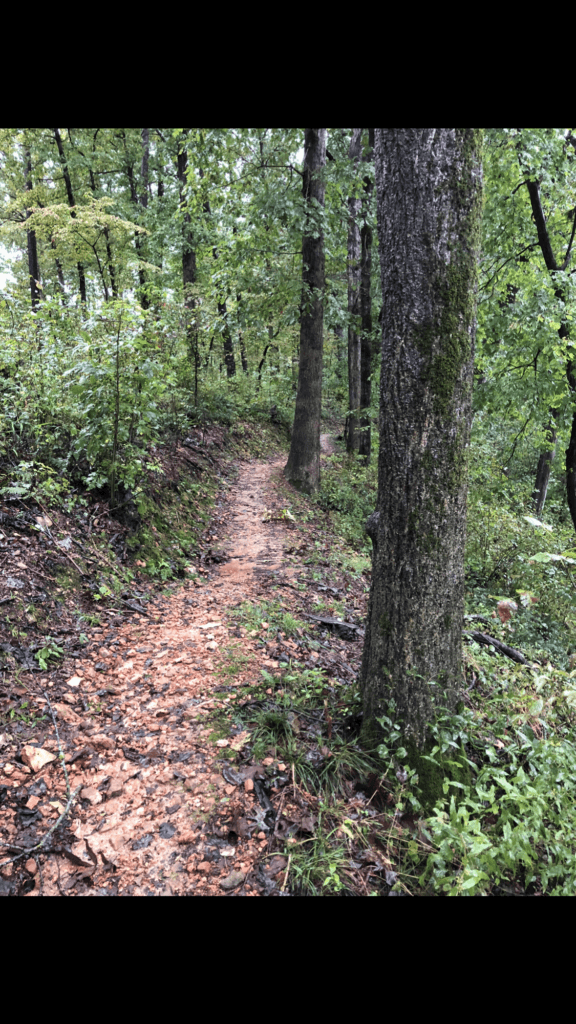
Bushcrafting! I confess I had not personally heard of this term as a practice until just a few years ago, even though I’ve been absolutely obsessed with learning and practicing wilderness survival skills for the past 4 decades. I had first heard of wild places being referred to as the “bush” when the movie Crocodile Dundee came out in the mid 80’s. As a kid in love with the outdoors, I was absolutely awed by the main characters level of awareness, survival prowess and confidence in the wild Australian “bush”.
In fact, the term “bush craft” largely originated from Australia and has since gained popularity through a number of reality “survival” television shows. Many other regions refer to their wild places as the “bush” as well, as is the case with the Alaskan and African Bush. The term has expanded to include a diverse range of knowledge and skills for living in the wild from all over the world. So, what is bushcrafting? Here is my personal take on the subject:
Bushcrafting, in essence, is the ability to use acquired knowledge and skills to efficiently utilize natural resources and materials in the wild places (the bush) with very minimal tools and supplies, to not only survive, but to thrive for as long as needed or desired.
Today, you can find a variety of bushcraft channels on YouTube and other platforms, with bushcrafters demonstrating their craft from Australia, North America, The United Kingdom, Europe, Asia and other lands. Even though many of the principles and skills of bushcrafting remain the same throughout the world, each of these bushcrafters has their own unique definition and approach to how they practice their craft.
Is bushcrafting just another cool name for wilderness survival skills? Well, survival skills are definitely a part of what bushcrafting is about; but there is much more to it than that. Bushcrafting goes well beyond basic survival skills with a more long-term approach to living in harmony with nature in the wild places. Survival, on the other hand, is about ensuring that a person has their immediate basic human needs taken care of, most often in an emergency situation. When a person is in a survival situation, comfort is not high on the priority list.
The practice of bushcrafting does not have to be only in the setting of a survival situation, as many bushcrafters view it as a hobby, an escape or as a fulfilling way of life. Bushcrafting can take it to the next level and beyond, as after the immediate requirements of survival are met, a person can begin to vastly improve their living situation in the wild. Using improvisation and a measure of creativity, a person armed with a bushcraft skillset can then “craft” needed items from natural resources found in the environment to make their stay in the bush more comfortable and enjoyable.
Whether you’re just starting out on the bushcraft path, or you’re a more experienced outdoor enthusiast, the study and practice of bushcrafting can open up a wide world of possibilities for your outdoor adventures and explorations. It can help you get off the beaten path with self-reliance and confidence and, speaking personally, it’s just a whole lot of fun!
I’ve put together a few “trailhead markers” for you to consider as you start down the bushcraft path and maybe a few new thoughts or familiar reminders for the more experienced. What I present to you is a result of my personal experience and my own approach to the practice of bushcraft.
Building Your Skillset on a Strong Foundation
If you want to build on a strong foundation while learning a progressive bushcraft skillset, I highly recommend cultivating a bushcraft mentality. For me, that means first and foremost, developing situational awareness. While you may or may not be faced with an immediate survival situation, being aware of possible scenarios or dangers in any given area is the first step in being prepared.
For example, could the site you’re considering for your bush camp potentially flood during a storm? Are there any dead or rotten looking standing trees (widow makers) that could fall on your shelter while you’re sleeping? Are there dangerous predators in the area? Will the weather change to expose you to life threatening elements such as extreme cold, or heat? Your safety and that of those who may accompany you should be your first consideration, so developing such vigilance is essential.
Training your awareness to also observe and take careful note of potential resources can prove to be an extremely valuable habit to develop. When trekking through the wild places, being always on the lookout for suitable camp sites, firewood/ fire starting materials, shelter building materials, water sources, and game sign can all become second nature with time and practice. Having this habit in place can bring a tremendous peace of mind in knowing that you are prepared to face any challenges in the wild with confidence!
Being alert and aware of lessons to be learned can help a person make progress as a bushcrafter as well. Nature has a way of humbling the arrogant and proud, so I’ve found that humility is an important trait to acquire while learning in the wild. A proud and closed person doesn’t learn or grow. So, I personally suggest leaving ego and pride at the trailhead and being wide open to learning.
Mistakes will often be made, even by the more experienced bushcrafter at times. Being willing to learn humbly from the lessons they provide and resiliently taking them in stride can be beneficial to the progress of a bushcrafter. I strive to view myself as a student every time I go out, and I’ve found it to be quite conducive to continued growth. Again, this “awareness approach” is a result of my own personal experience and lessons learned in the practice of bushcraft.
Various Principles & Aspects of Bushcrafting
Many of the principles for bushcrafting are the same wherever you may be on the planet. However, there may be variations within each aspect of these principles depending upon the region of the world you live in, climate, terrain, and availability of natural resources. These principles have a great deal to do with basic human needs and survival but can also go beyond such needs for a longer and more comfortable stay in the wild. Below is a brief description of each of the primary principles of bushcrafting:
Shelter: Whether you’re quickly putting together a well-insulated leaf litter debris shelter for protection from the elements or taking the time to build a more advanced and comfortable A-frame, small bush cabin or other sturdy long-term shelter, there are a wide variety of shelter configurations you can experiment with.
Water: Where I live here in northeastern Oklahoma, we have abundant water sources with many lakes, rivers, streams, etc. But in many areas, such as throughout the southwest region of the United States, water can be much scarcer and a challenge to find. Even in those drier areas though, water can still be found if you know where and how to look. For example, gathering dew from rocks in desert regions during the morning hours with a rag or bandana can yield quite a bit of moisture. Regardless of the availability of water in any given area, the ability to find it and then to filter and purify it from contaminants and harmful pathogens is crucial for the bushcrafter.
Fire: It should be a priority to become proficient in building and starting a variety of types of fires with a ferrocerium rod or fire-steel. You can also create fire from natural materials by building a friction bow drill or by using fatwood (wood that has been naturally saturated with highly flammable resin, such is found in many evergreens). This can be an especially useful skill to have when wet conditions make starting a fire seem impossible to accomplish. When these skills are mastered, common fire starters that may be exhausted, such as matches, and lighters may become unnecessary. Always use good judgment on whether to leave such items at home or not though, and only after such skills are mastered.
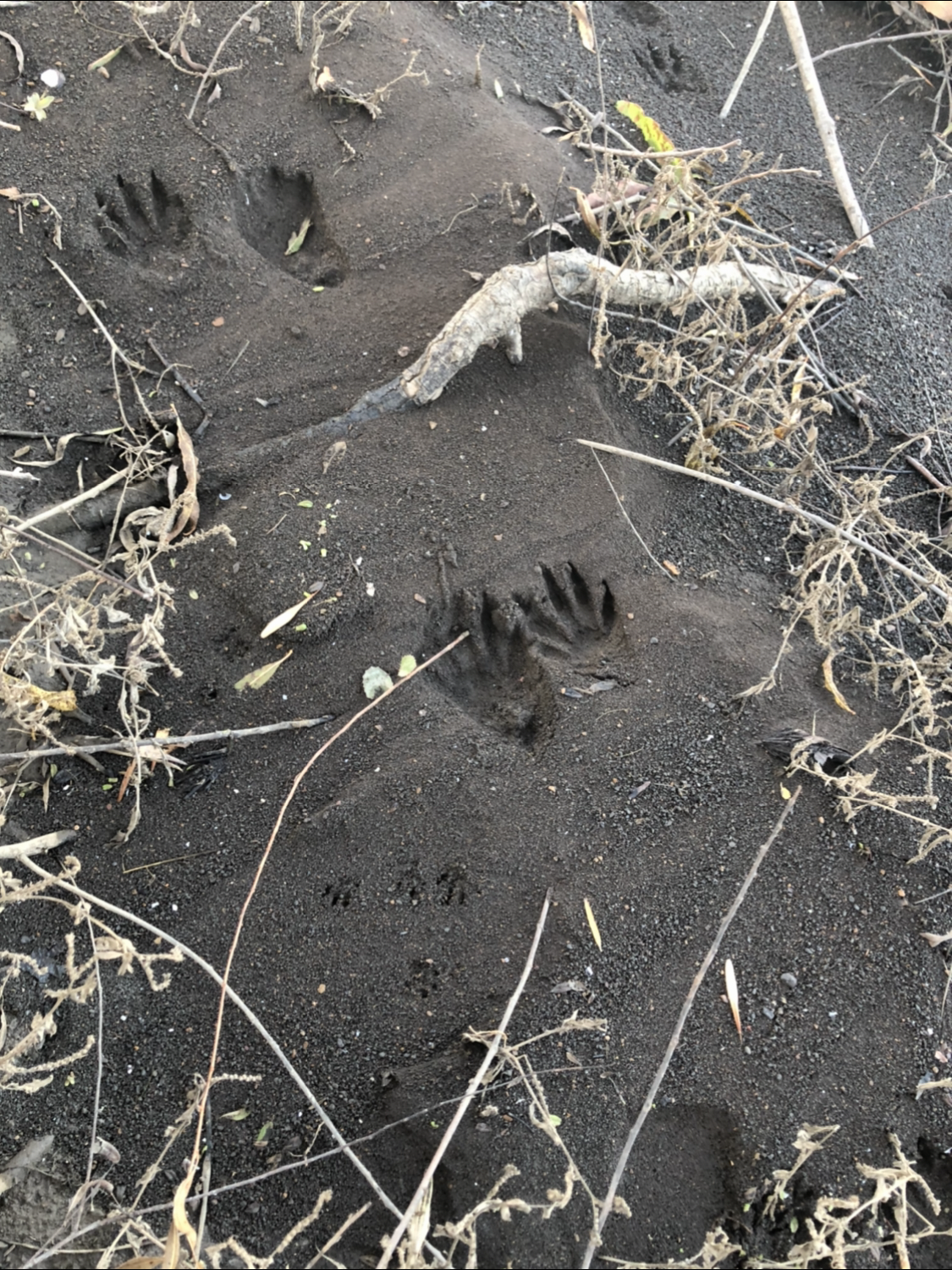
Tracking/ Hunting /Trapping/Fishing: The ability to read and understand animal sign and tracks can be a valuable skill when hunting game, as is the ability to “craft” traps and snares for both game and fish. When you do harvest meat from hunting or fishing, it is vital to have knowledge of how to safely clean, prepare, cook and preserve your bounty. Having a knowledge of the game and fish laws and regulations is very important too, although exceptions are usually made in an actual survival situation. Whether or not you are able to hunt or fish legally while bushcrafting, practicing such skills without actually harvesting any animals can help you become confident in your ability to do so when there is a legitimate need.
Foraging: Learning to safely identify and harvest wild edible and medicinal plants and herbs, as well as mushrooms throughout the seasons can be both enjoyable and very rewarding. Many trees also have edible and/or medicinal uses, such as many evergreens, willow and birch trees. Positive identification is a must though!
Crafting: For me, this is where bushcrafting gets interesting and fun, and what most distinguishes bushcrafting from basic camping or backpacking. With just a few simple tools and some creativity, there are a large number of useful items and shelter types that can be “crafted” from natural materials. For example, a bushcrafter can gain experience with fashioning eating utensils, cups, spears and traps for fishing or hunting, camp chairs and beds, tree stands, and ladders.
Navigation: Being lost in a wilderness setting can be scary, so knowing how to navigate using a compass, map, the sun, stars and other natural means can save a bushcrafter from a lot of grief and stress.
First Aid: Most bushcrafting activity takes place a significant distance from other humans and from outside help; so, if a health issue, predator attack, or accident occurs, having as much knowledge as possible of bush country first-aid can be potentially lifesaving.
Knots and Lashings: There are many types of cool knots and lashings out there to be learned. They can be highly useful for such things as shelter building, furniture making, and traps. Many bushcrafters (myself included) usually have only a select few that they favor and use, so it’s not necessary to learn every one of them, unless you just want to. Some examples of these are the timber hitch, diagonal lash and tri-pod lash.
What Gear Do I Need for Bushcrafting?
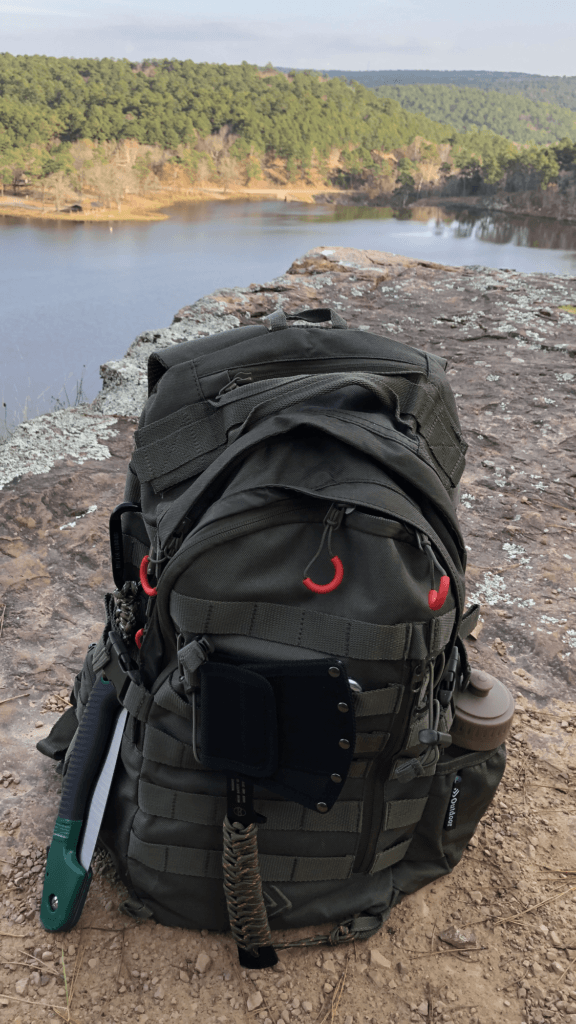
The gear needed for bushcrafting may vary depending upon factors such as terrain, weather, and duration of stay. Many bushcrafters prefer a very traditional and minimal approach for a more primitive or “pure” bushcraft experience. Others prefer to take a few “comforts” in the form of modern gear. I personally try to find balance between the two, since I appreciate the need and opportunity to learn and practice traditional skills, but I also love my cool gear! To get started, gear doesn’t necessarily need to be fancy or expensive, but it should be durable and dependable. You can always upgrade your gear later.
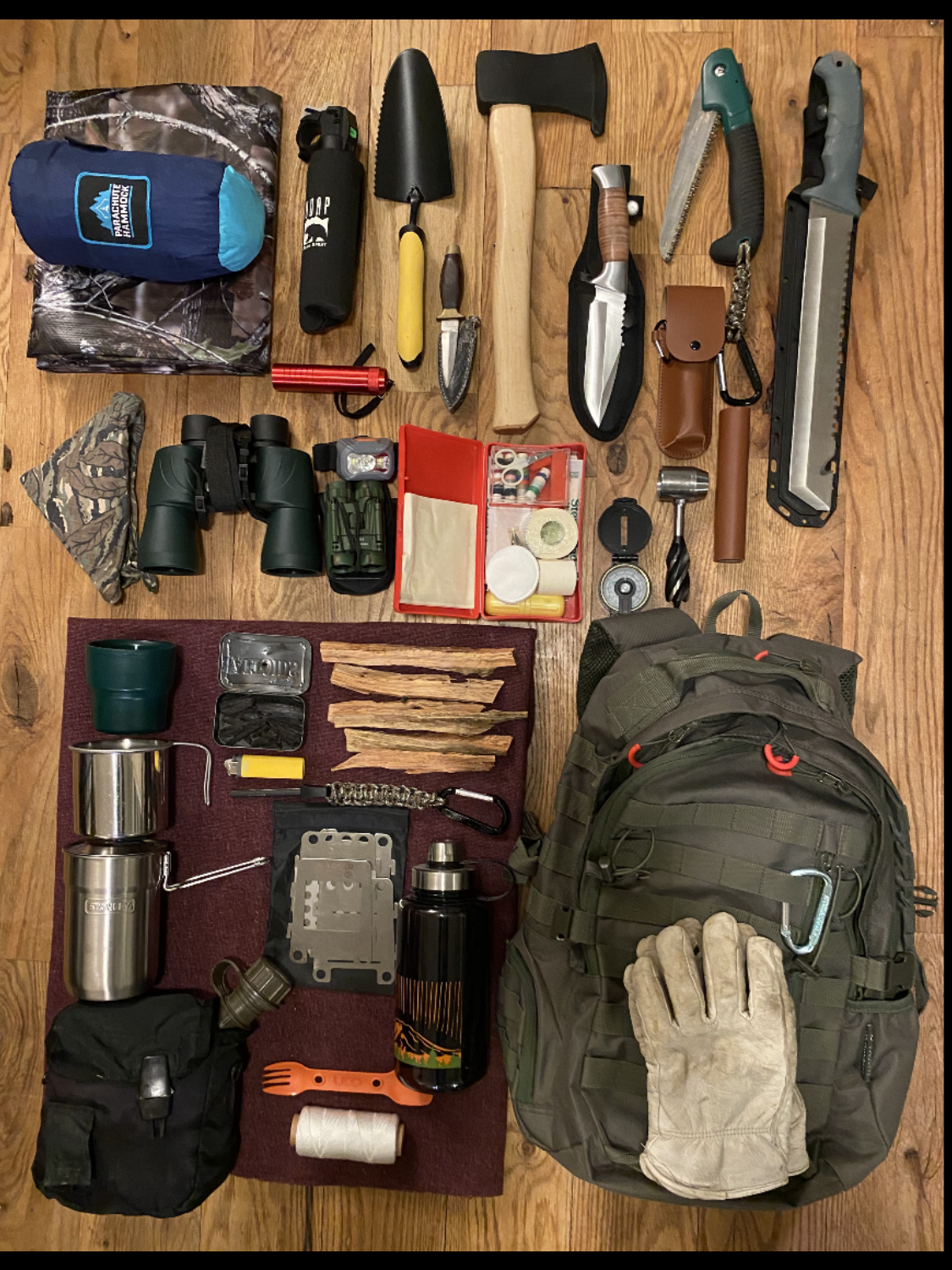
I believe a few select items are very essential for every outing into the wild and should be a part of every bushcrafters kit. Even if going on a day hike for a few hours, items such as a bush knife, compass, fire kit, water canteen/ bottle, first aid kit, tarp and cordage should be included. Some items are optional for an extended stay, such as a tent; many bushcrafters prefer a simple oilskin tarp or to craft their own shelter from natural materials. And, of course, weather will determine what type of clothing will be brought.
Bringing a bush axe, knife and folding saw will usually be sufficient for many bushcrafting projects. For more advanced projects though, additionally having a bucksaw, manual hand auger bit and carving chisels may be preferred. For items that are not essential, it is often a matter of personal preference for the bushcrafter. There is no one way to practice bushcrafting, as it allows for a wide range of diversity.
Flexibility is needed when deciding what to bring, and when advancing in progress as a bushcrafter, some of these items may be left at home. As mentioned, after gaining experience with building shelters from natural materials, it may be preferable to just leave the tent at home. Below I’ve put together a basic list of bushcraft gear for beginners. This list is based upon my own personal preference and experience and is not necessarily listed in order of priority:
- Backpack/ rucksack
- Water bottle/canteen
- Water filter/ bottle filter/ purification tablets
- Tent/ tent hammock/ tarp (oilskin preferred, but optional)
- Sleeping bag/ bedroll/ wool blanket
- Ground pad
- Fire kit: Lighter, waterproof matches/ ferrocerium rod/ fire-steel
- Collapsible wood burning fire box
- Cook mess kit: Cup, bowl, small cook pot/pan, spatula, spork, or preferred eating utensil
- Compass
- Whistle
- Notebook and paper
- Maps (preferably laminated)
- Toiletry kit: sanitizing wipes, rag, toothbrush, biodegradable soap, etc.
- First-Aid kit
- Lantern (optional)
- Flashlight/ headlamp (with extra batteries)
- Binoculars (useful when hunting or birdwatching)
- Emergency thermal blanket
- Fishing kit: Hooks. lures, fishing line, & small collapsible fishing pole (optional)
- Walking stick/staff
- Bear bag (for hanging food up in bear country)
- Cordage: Paracord, braided twine, or jute
- Bush axe/ hatchet
- Bush knife (with sharpening stone)
- Multitool or Swiss Army knife
- Folding Saw
- Bucksaw (optional)
- Carving knives/ chisels (optional)
- Manual hand auger drill bit (made in various sizes, optional)
- Folding camp shovel or trowel
- Field guides/ manuals
- Clothing: Hiking boots, pants, socks, underwear, t-shirt. warm over shirt, warm jacket, hat, beanie or other headgear (bringing spare items where needed)
- Bandana
- Leather work gloves (insulated if weather is cold)
- Rain poncho
Where Can I Practice Bushcraft Skills?
Many bushcraft skills can be practiced in your own home, or in your backyard. For example, I like to regularly practice my knots and lashings while I’m sitting on the couch in my living room. I also practice tracking in my backyard, since we have a lot of deer and other critters traveling through, as well as building and starting fires from natural materials. If you live within city limits though or in areas where fires are prohibited, you may need to travel somewhere where you can practice your skills safely and responsibly.
If you own private land or have permission from someone who does that will allow you to practice your bushcraft skills there, then great! Many National Forests and wilderness areas may allow for bushcraft camping, there may however be certain regulations or restrictions to consider. For example, it may be prohibited to chop live trees, build fires, and there may be a limit to how long you’re allowed to camp in a given area. It is always recommended to inquire and verify before proceeding.
Take Your Outdoor Adventures to the Next Level
In summary, I would define bushcrafting as the ability to use knowledge and skills to utilize the resources found in a natural environment to not only survive but to thrive comfortably. It requires developing a vigilant awareness of potential dangers, useful resources, as well as an ability to learn from mistakes. It’s about being adaptable, being able to improvise and to be creative in crafting needed shelter, tools, furniture or other items for an extended stay in the bush. And for me, it’s been about reconnecting with nature and with many of the lost skills needed to live in harmony with what is provided in the wild.
I believe that anyone can learn this highly valuable, enjoyable and rewarding pursuit. So as your age, health, or other circumstances allow, I would like to challenge and inspire you to get out there into the wild places and start walking the bushcraft path. It does take effort to learn the various principles, aspects and skills of bushcrafting, but the benefits are many. The peace of mind and confidence that comes from having a wide repertoire of knowledge to draw upon, whether you’re in a survival situation or are there in the bush for a more willing extended stay is priceless! Will you join me on the path? Then welcome to Bushcrafting for Beginners and stay tuned for more!